
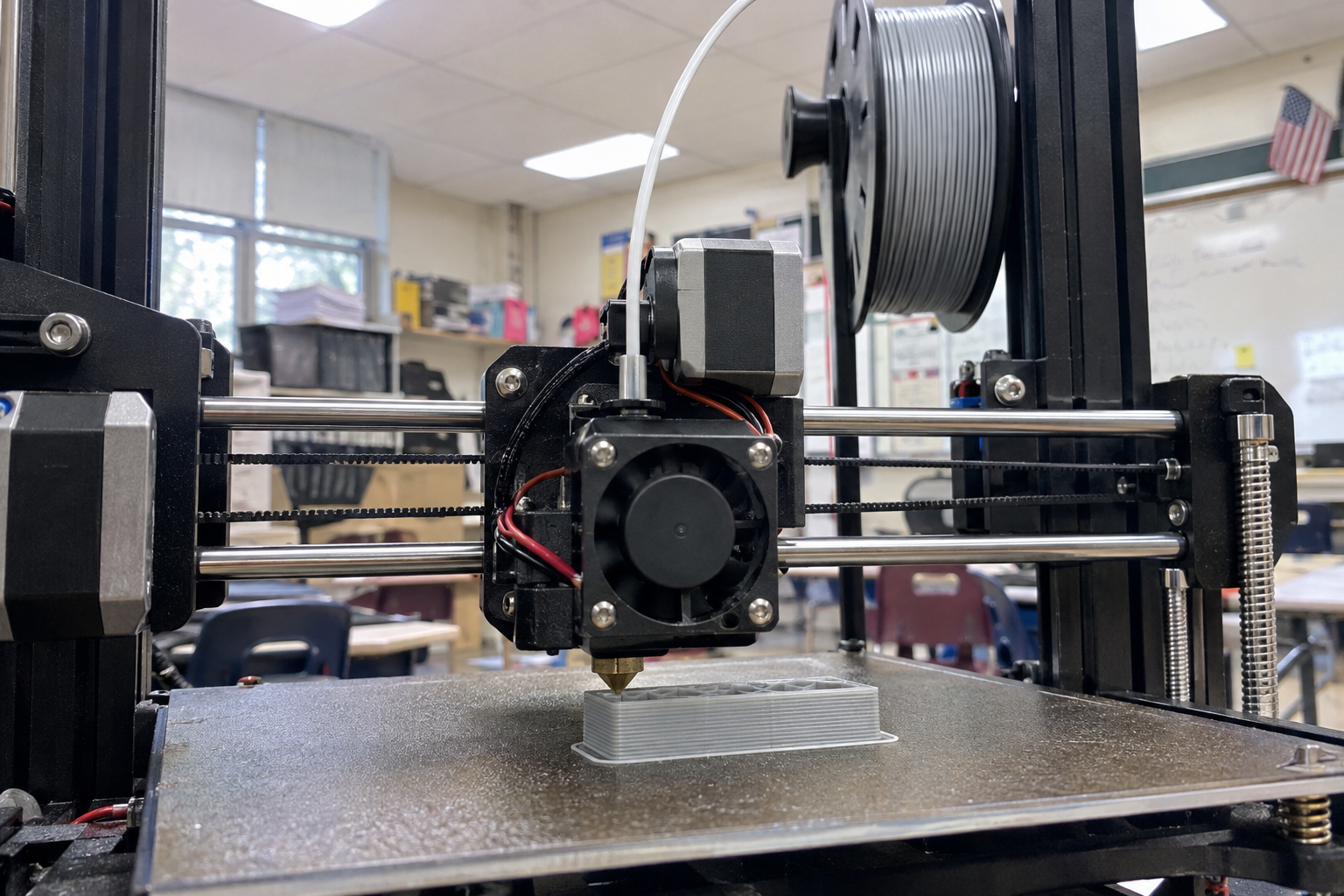
From application to student projects.
A simple process with published rules, so teachers know what to expect and donors know where every dollar goes.
Five steps
- 1
A teacher applies
Tell us about your students, what they will build, and which package you need. It takes about 15 minutes.
- 2
We review
We score every application on need, student reach, and the plan, and confirm it with your principal.
- 3
Donors fund it
Approved classrooms are funded from our general fund or by a donor or sponsor who picks your classroom.
- 4
We buy and deliver
We purchase the equipment ourselves and ship it to your school. No cash changes hands.
- 5
Students make things
After 90 days you send a few photos of student work and a short note. We share it with the people who paid for it.
How we choose
Every confirmed application is scored the same way. Title I schools get priority when scores are close.
40%
Need
Title I status, share of students on free or reduced lunch, and what the school has today.
30%
Student reach
How many students will use the equipment each year.
30%
The plan
What students will actually design and make, and how it fits the curriculum.
What we fund
Four fixed packages, so every dollar has a clear destination and we can buy in bulk.
Starter printer
about $600
- One classroom-friendly 3D printer
- 10 kg of PLA filament
- Spare nozzles, build plate, and basic tools
A teacher getting started with 3D printing in one class.
Help fund oneClassroom lab
about $1,800
- Two 3D printers
- 25 kg of PLA filament
- Safety gear, spare parts, and a starter lesson guide
A teacher running printing projects across several sections.
Help fund oneMaterials refill
about $200
- Filament and consumables for one semester
- Replacement nozzles and build surfaces
Classrooms that already have a printer but no budget to run it.
Help fund oneSTEM kit set
about $1,000
- A class set of robotics or electronics kits
- Matched to the grade level in the application
Hands-on engineering beyond printing.
Help fund one
Costs are planning estimates. We ask vendors for education pricing and confirm real costs at purchase.